Wild Wild West

2026 started off with a low note. We had a beautiful New Year’s Day, followed by several weeks of non-stop rain, including a few named storms. And one of those storms, called Chandra, hit on the 26th Jan.
And after seeing rain constantly all day and all night, we woke up to find some damp patches on one of the walls, so apparently there was a leak somewhere.

The patches were a bit random, so we couldn’t be sure where that leak was coming from. There was nothing obvious outside, like any missing roof tiles, but there was plenty of evidence of how extreme the weather had been. And the attic did show evidence that the leak may have been going on for a while.

And more importantly, the leak also found it’s way down to the newly built pantry. The timing was actually pretty lousy (or lucky, depending on your philosophical outlook) because we had just been to the local carpenter, in readiness to order some wood to build our pantry shelving. And the day before this happened, I’d received the confirmation email, with a link to pay for it. So obviously that particular job had to take a short break until later in the year.

Eventually the constant downpours did subside and the patches stopped expanding, and even dried out. What was left were patches of peeling paint and stained paint.
We decided it was best to give these some time to really dry out before looking to fix the patches, but in the meantime we’d contact some roofers to see if they can come out and figure out what’s wrong. Unfortunately, following a very storming few months, roofers were in high demand, so even trying to get hold of one turned out to be a tall ask. After a few weeks we hadn’t heard back from anyone.
Luckily for us, our neighbours directly opposite, were having some work done to a small bit of roofing, and so I contacted the number on their van to see if they were able to come and have a look while they were in the area. And they thankfully obliged.

Mind the Gap

The roofer popped over (after he’d finished his actual job) and pulled out an extremely long ladder, so he could get up and have a look for any damage. As expected, there wasn’t anything significant, but there were a log of small gaps in the old mortar, that rain could easily makes it’s way into. Especially if that rain was constant for a long period of time.

Fortunately that also meant that for just a few hundred quid, he could come and fill in those gaps, waterproof the area, and add a cowl, to minimise any future of water ingress. And after a few weeks, the scaffolding was erected, and then a few weeks after that they came and did the repairs.

This was also at the same time the landscapers started working on the back garden, and the same time as discovering that there was a problem with the new kitchen drains.

Ignoring those other job, all we needed to do now, was to sort out the peeling paint inside.

Climate Breakdown to the Rescue

We had to be sure that everything was dried out before we could try and repair anything at all, so we were hoping that once spring was out of the way, we’d get a nice spell of warm and dry weather to make sure everything was back to normal.
And the weather delivered! Summer 2026 turned out to be the hottest on record. So after the 5th heatwave, and experiencing twenty one consecutive days of maximum temperatures 25°C and higher, the house had been properly baked in the summer sun, and we thought it was probably a good time to finally repair the paint.

We also decided that if we were going to have to repaint the hallway and stairs, that we might also go for a new colour too. We originally just did a pure brilliant white, to make things easy. But first we needed to scrape of the paint that was flaking and peeling.

This didn’t seem too bad, but it was one of those jobs where you start peeling and suddenly a lot more comes off than you were expecting, and then as you try and make sure you’ve got every loose bit, the scraper gets another part and peels off yet more.
Undeterred by this, we were keen to get every last bit of loose paint off. And we then treated it with some Zinsser Peel Stop, to try and make sure there was no chance of any more coming off.

It did technically work, but as we went over a couple of patches with the new paint and a roller, it did manage to lift some more flakes off. But these were all areas that we hadn’t scraped beforehand, so the Peel Stop did it’s job, these were areas we hadn’t been treated, because we couldn’t see that they were there. So a second round of scraping, treating, and painting, did the trick.

And luckily the new paint even managed to make the walls look a bit more smooth and even too, so we’re happy with. Let’s see what Winter 26/27 has in store for us.

Bee Positive

So as some of you may be aware, Kate has wanted bees for a long, long time and constantly goes on about it. We have many bee books on the shelves, a beehive shaped composter, bee jewellery, and the list goes on. However, I have not been a strong advocate, as I think we’re probably a little too busy at the moment and whilst making our own honey sounds like a nice idea, I suspect that it would be a lot more work that it seems and it would probably annoy a lot of our neighbours too.

In the meantime, we always try and plant lots of bee (and butterfly) friendly plants that will hopefully help them prosper and attract them to the area. And we’ve put up a little bee house, to help them out (as mentioned in some earlier posts, 1, 2)

Well it looks as if our efforts have started to really pay off, becasue we noticed today that we now have have our own colony of bees!

The dance

I was looking out of our kitchen window after breakfast and noticed the shadow of something swarming around. I assumed it was going to be flies or mosquitoes or something, but didn’t think they would be big enough to really make a shadow. So I thought I better go and see what it was and what they were attraced to. Turns out, we had a load of bees (or at that time, I thought possibly wasps) attracted to our stack vent!

Bee butt

As it turns out, the tiling around the pipe hasn’t been fixed properly and the tiles have slipped down, leaving a gap around the pipe, which the bees have decided is the best place in town to stay for the summer.

Excuse the mess

So this is going to be something we’ll have to add on the the list of jobs that need doing. It probably explains why the bathroom ceiling has mould around that area. The roof tiles have a few missing bits and pieces, so it might be worth doing a proper job on it all.

Anyway, I tried getting a few close up shots (easier said than done), and I am fairly sure that they are Tree Bumblebees (Bombus hypnorum) which are a relatively new species to the UK.

Photoshopped

Importantly, they tend to only stay for the summer before moving on and don’t cause any damage. So we are going to try and see if we can cohabit with them for a little while and see how things go.

Whilst I was clambering on the utility room roof, I also noticed that the bird box I mounted last year actually fell off.

What a mess

I will see if I can find some replacement slate and fix it up, as apparently this is the type of place that Tree Bumblebees actually like to nest, even if the birds continue to ignore it.

If there are any updates, we’ll keep you posted here.

The Garden, Foraging and More

I haven’t updated in a long time and where better to begin a new post, than the garden?

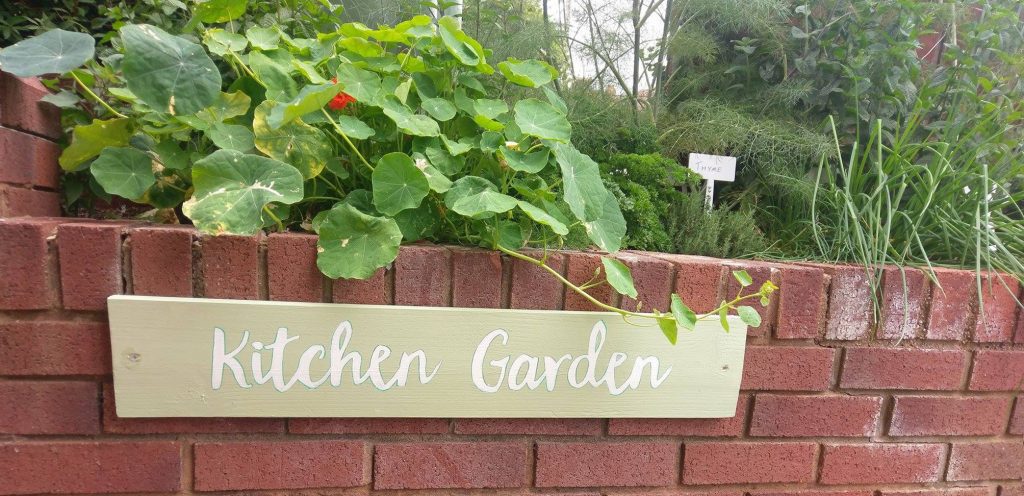
Not a lot has changed. We’ve filled up our ‘Kitchen Garden’ area now and I’ve make a little sign too (I will go into more detail in another post) and added a couple more decorative plants too.

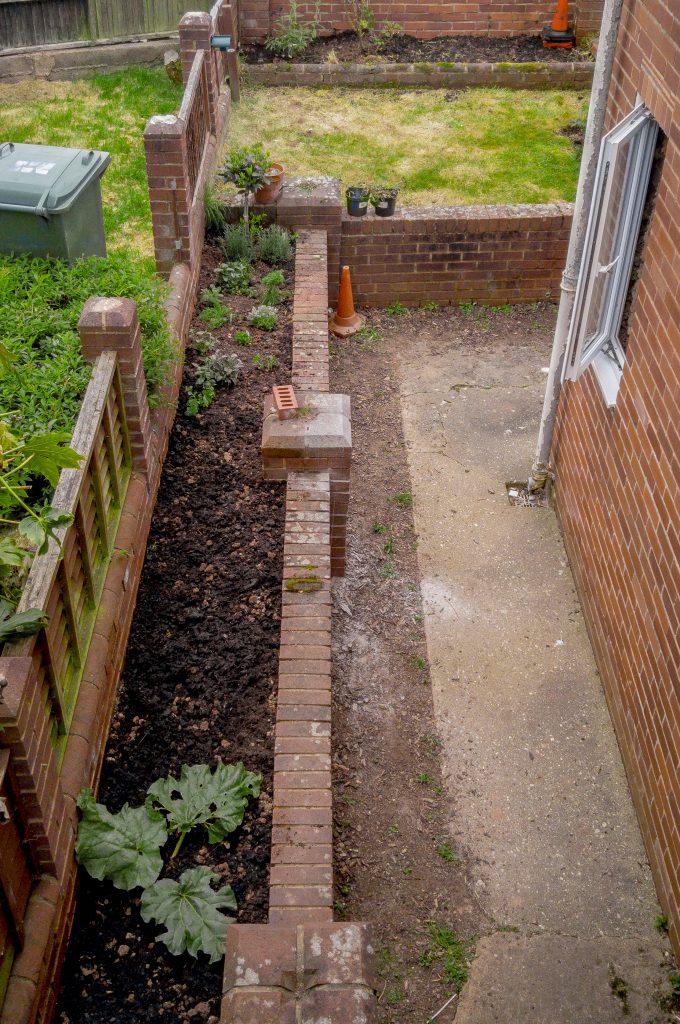
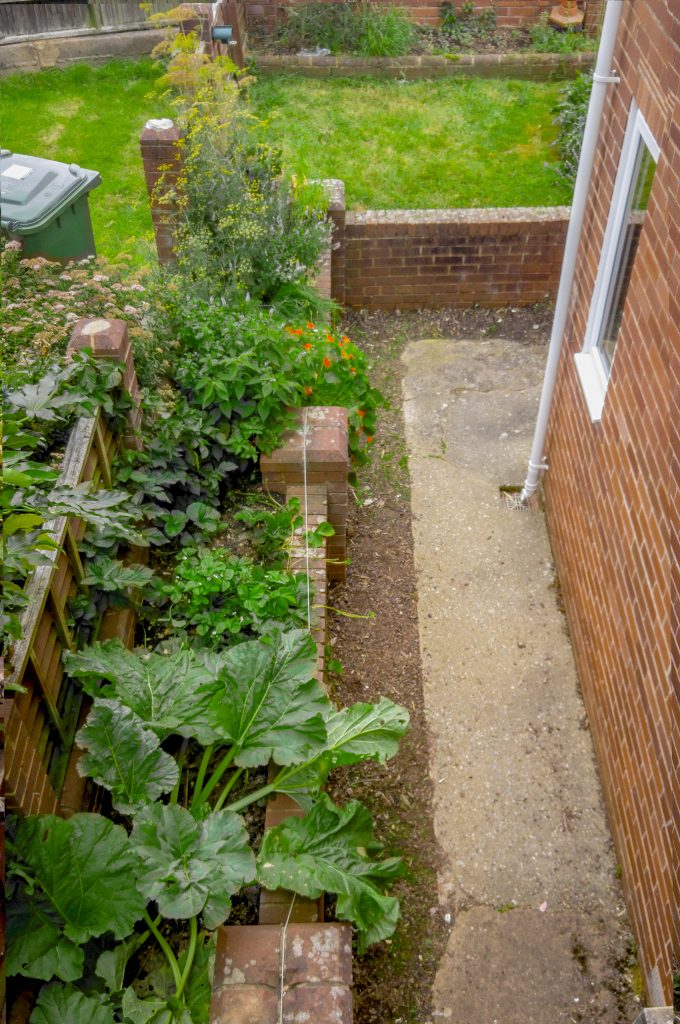
The rhubarb planted earlier in the year has now reached a sort of monstrous climax in its growing. I can’t wait to pick it, but I have to, because we need to leave it alone for at least a year to let the crown establish, or two years if we can control ourselves. Hopefully, then the rhubarb will last a long time and be really productive.

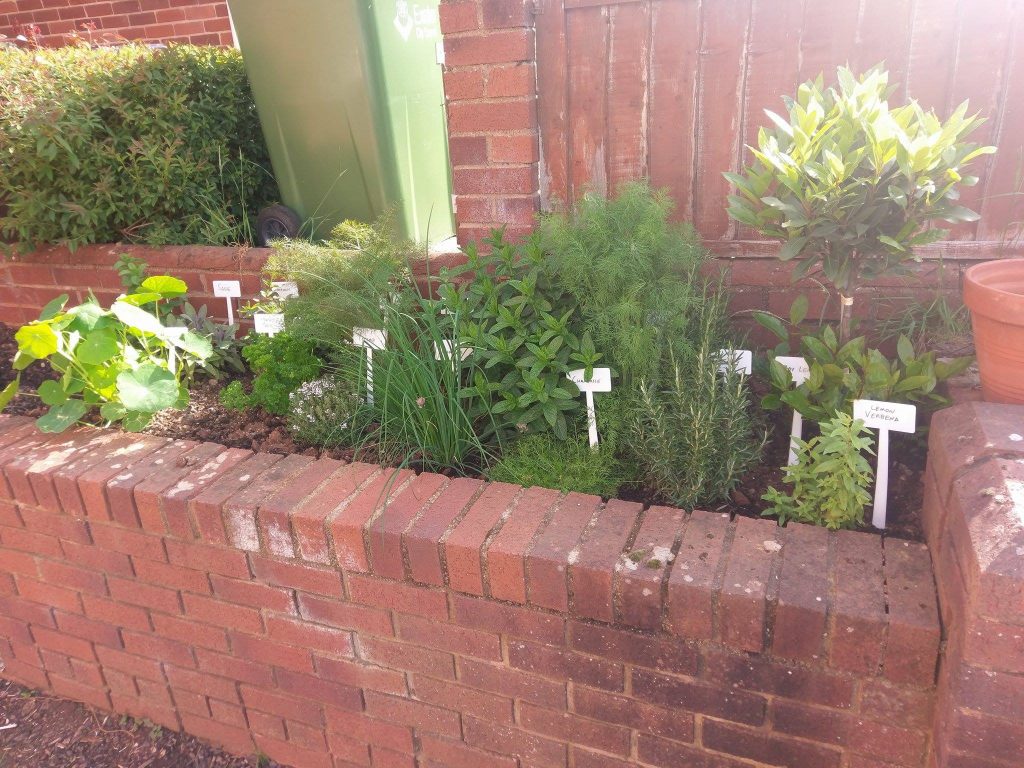
Kitchen Garden in early summer

It’s not just the rhubarb, the whole kitchen garden has started to grow wildly out of control. The dill and fennel are just being ridiculous and all of the mint is greedily occupying any space it can find.  The rosemary has started to surpass the rather slow growing bay tree and the lemon verbena is just starting to show off. All the while the sage has died under the suffocating presence of the nasturtium and the rambunctious pineapple sage which we planted more recently has flourished.

I find this often happens to me. I get seeds or small plants and micromanage their first few months and once they start to establish I tend to leave them alone, then one day I’ll walk out of my door into a jungle.

Well, apart from my deceased sage plant, the only thing that isn’t having a good time is the thyme. It’s been a bit slow in growing and now it’s got hardly any light, not dead though, so that’s a plus.

We’ve planted some thorn-less blackberry plants and three new kinds of strawberries between the rhubarb and the herbs, and they’re all doing quite well.

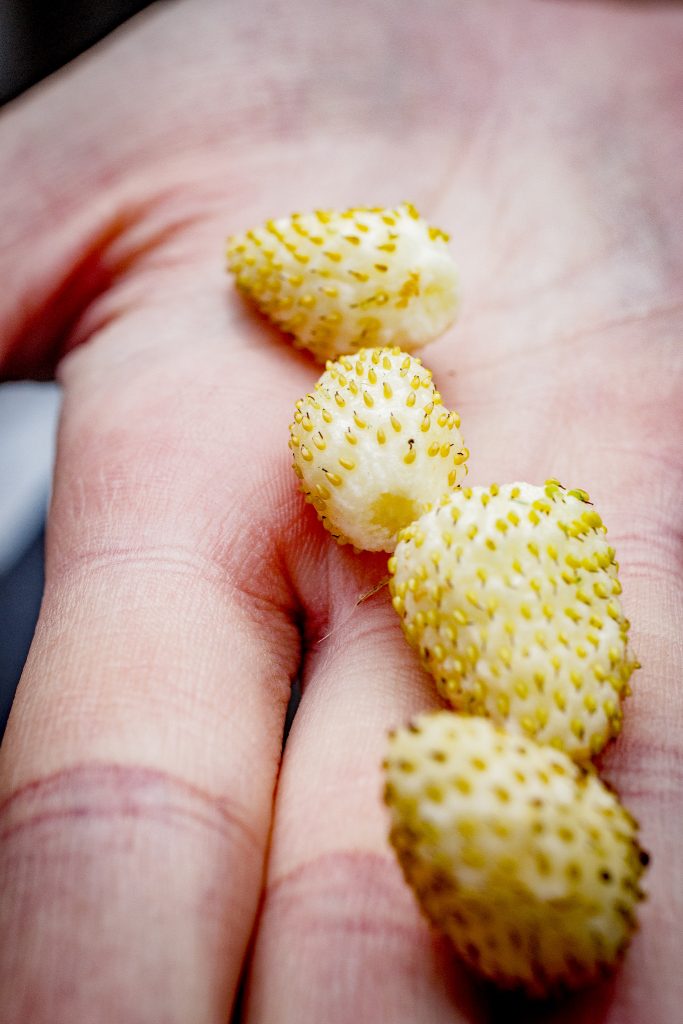
I also have two rather nice pineberry plants out the back. Frustratingly I thought they’d died when I was growing them from seed, so I just tipped out the plant onto a patch that had been dug up and saved the pot. However a couple weeks later I noticed new growth on the plant and decided to put some compost around the roots. It’s done exceedingly well and I’ve had quite a few (albeit very teeny) pineberries, and they’re very tasty. I’ve been waiting for it to send out little creepers like the rest of my strawberries so I could pot it and move it into the kitchen garden. Alas, it has decided not to send any out. I’ll just have to order some seeds again in the new year.

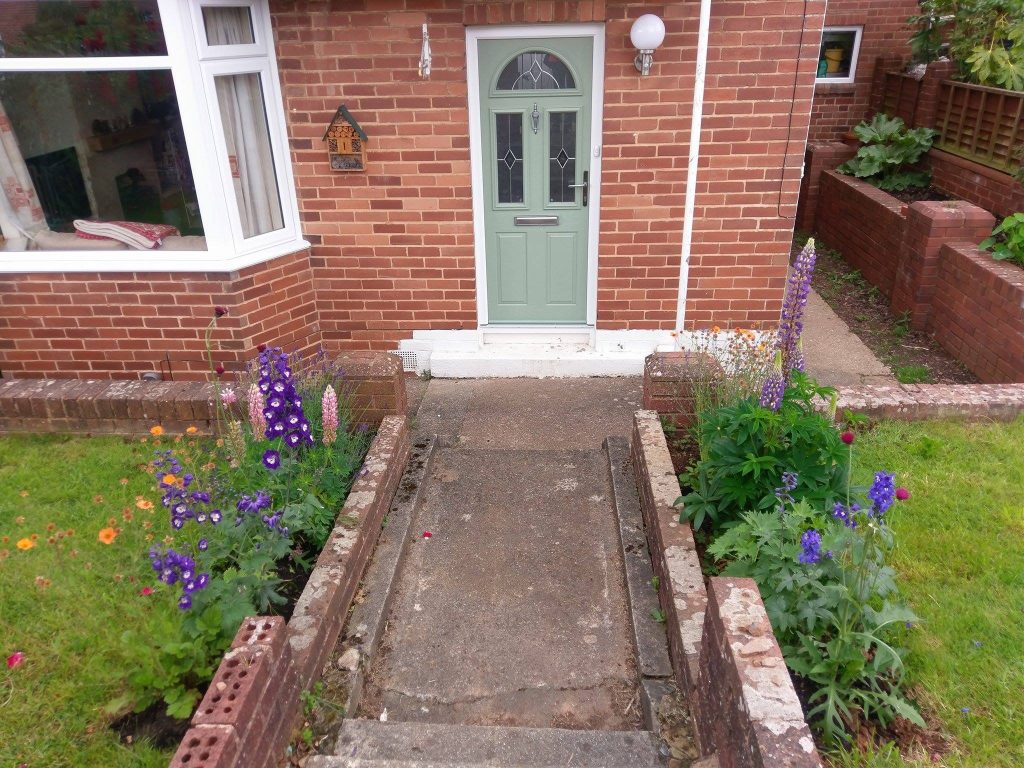
Lupins, Geums, Delphiniums, Thistles, Lavender and our NEW(ish) DOOR (and windows)!  Early Summer

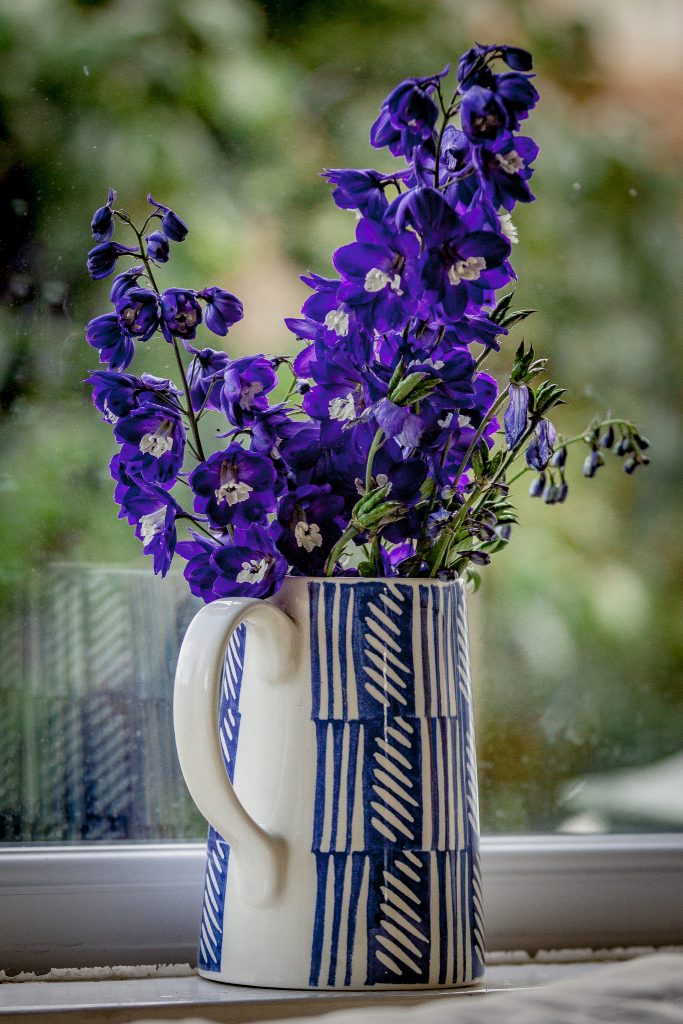
The weather has been a bit challenging for the other plants in my garden. The delphiniums were just snapped in half with the strong winds earlier in the year. The broken bits made it into a jug and lived for about a week in the house, which was nice. They grew back again, and I cut them back once they died and they came back again but haven’t really flowed as nicely.

The lupins have had an aphid problem this year (as did the nasturtium ). They put on a spectacular show at the beginning of the year though.  I have also added some ‘Totally Tangerine’ geums which set off the purple plants nicely, as well as a couple of violent magenta thistles which the bees love. Another new addition is the buddleja in ‘black knight’ in the front garden.  We’re hoping it’s going to grow well behind a wall and to block out the neighbours a little bit as well as attract a lot of butterflies.

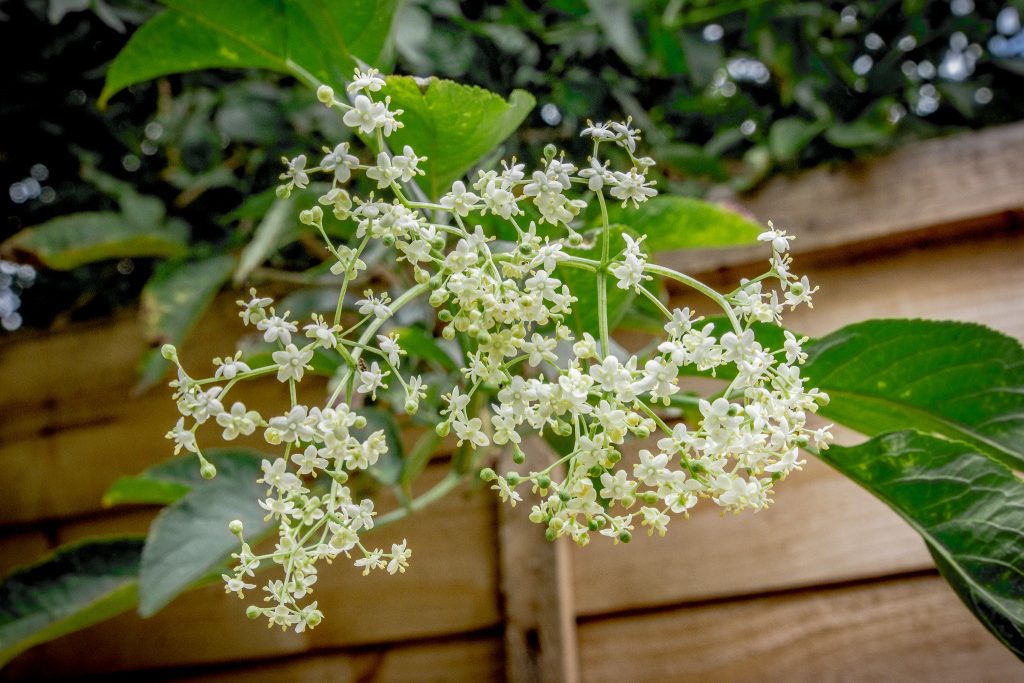
Last weekend, we were excited to discover that a tree that overhangs into our garden is, in fact, Elder. I have to admit that I’ve never paid much attention to the creamy umbels before nor the black berries on it. Paul happened to notice them as we were cutting the grass recently and got just a little bit excited and marched outside with a couple of our plant books and a camera, and I picked off a leaf and used my ‘British Trees’ app to identify it.

Paul in particular is now excited thinking about all the things we could make: Elder-flower cordial,  elderberry and apple pie and the list goes on…

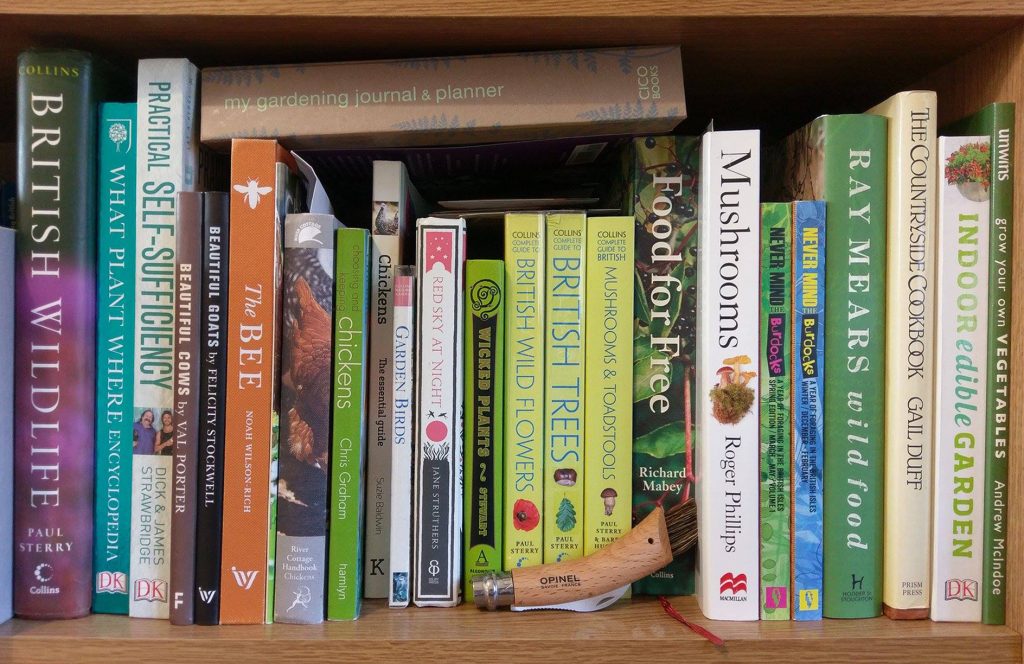
We both really enjoy foraging, or maybe the thought of foraging? As we very rarely do it, although we do have some literature on the subject.

We recently (in July) had a week long stay in Cornwall on holiday and a couple of weeks before we went, we saw The Lost Gardens of Heligan were hosting a foraging event ‘Wild Food Wild Walk; with Emma Gunn’ (from Never Mind the Burdocks) . The event was £20 each but also included entrance to the gardens which is ordinarily £14.50 each anyway. We booked it in advance, afraid that it would be overrun with people trying to go last minute, but we were in for a treat.

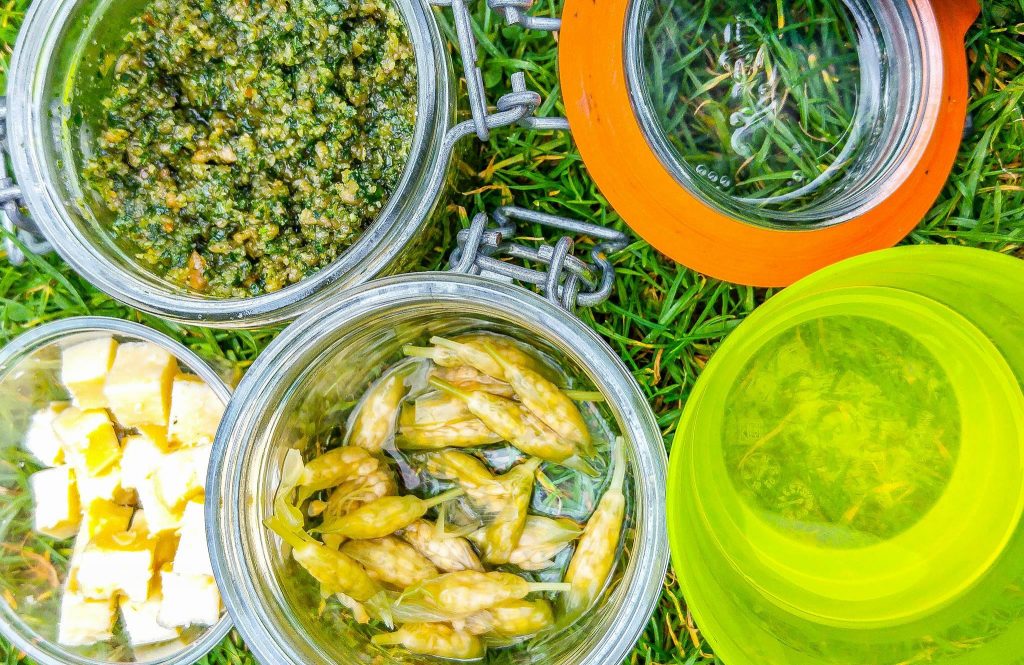
Garlic mustard pesto and pickled wild garlic seed pods with Honeysuckle cordial

We got there on the day only to discover it was just Paul and I on the tour with Emma.  It was a fantastic day, the tour lasted around 2 hours and at the end Emma brought out some food she’d made from foraged plants. There was gluten free Hogweed seed, cherry and almond cake, garlic mustard pesto and  pickled unripe Ramson seed pods as well as a honeysuckle cordial, all of it was delicious but in particular the wild garlic seed pods and the cordial. Unfortunately we were so preoccupied with stuffing our faces with cake, we didn’t get a picture.

We also made sure to buy both of her books in the Heligan gift shop before we left and eagerly await the next.

Some of things we ate include: Unripened Hazelnuts (which I actually prefer over ripe ones); Bamboo shoots; Day Lilies; Nettles; Hogweed seed; Navelwort; Primrose leaf; Garlic Mustard; Comfrey; Nectar of Fuchsias; Mallow flower; and Sorrel leaves. There were many other too but I can’t remember the names of a lot of them off the top of my head.

I’n the future I think we both want to have the confidence to experiment a little with foraged foods (whether from the garden or further afield). In particular, Paul is eager to learn to make different cordials – so that’s always a good place to start.